What the Research Actually Shows About Laser Hair Restoration
If you’re researching laser hair restoration in Loveland, you’ve probably seen dramatic before-and-after photos and bold claims. At 18 Spa, we believe you deserve the full picture—what clinical studies reveal, what results are realistic, and what to expect from your investment.
Laser hair restoration (often called low-level laser therapy or LLLT) has been studied for over two decades. The data is encouraging for the right candidates, but it’s not a miracle cure. Let’s walk through what peer-reviewed research tells us, who benefits most, and how to set realistic expectations.
How Laser Hair Restoration Works: The Science
Low-level laser therapy delivers specific wavelengths of red light (typically 630–670 nanometers) to your scalp. These photons penetrate the skin and are absorbed by cells in hair follicles.
The proposed mechanisms, supported by multiple studies:
- Increased ATP production – Mitochondria in follicle cells produce more energy, potentially extending the growth phase of hair
- Improved blood flow – Microcirculation around follicles increases, delivering more oxygen and nutrients
- Reduced inflammation – Inflammatory markers that contribute to follicle miniaturization may decrease
- Cellular stimulation – Follicles in the resting (telogen) phase may shift back into active growth (anagen)
This isn’t heat-based therapy. The lasers don’t burn or damage tissue. Instead, they work at the cellular level to create an environment where thinning hair may grow thicker and dormant follicles may reactivate.
What Clinical Studies Report: Real Numbers
A 2014 randomized, double-blind study published in the American Journal of Clinical Dermatology tracked 128 men and 141 women with androgenetic alopecia (pattern hair loss). After 26 weeks of at-home laser device use:
- Participants saw an average increase of 19 hairs per square centimeter in the treatment group versus placebo
- Hair thickness improved measurably in treated areas
- No serious adverse effects were reported
A 2013 study in Lasers in Surgery and Medicine found similar results: participants using LLLT devices three times per week for 26 weeks experienced significant increases in hair density and thickness compared to control groups.
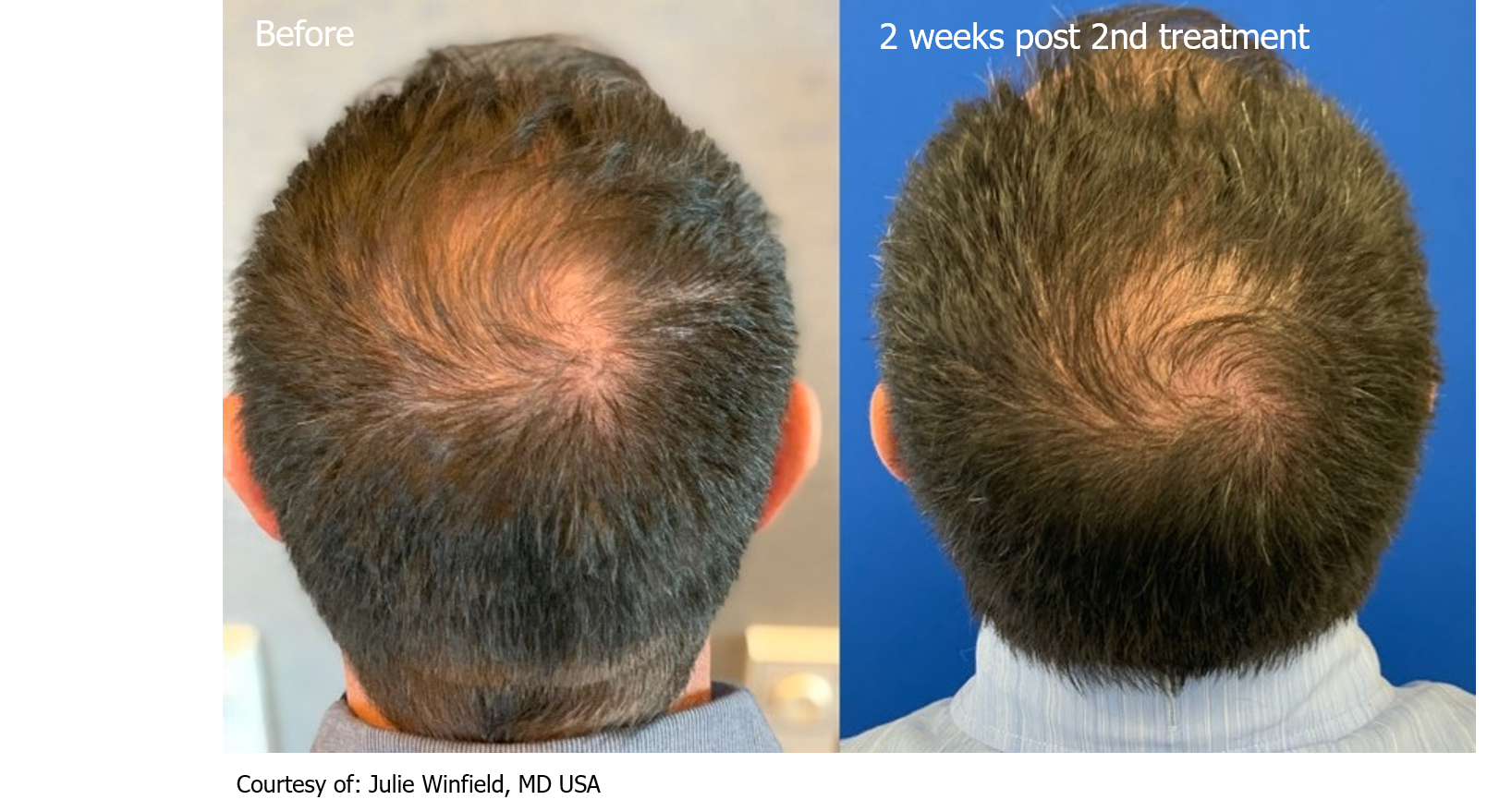
Important context: These studies measured improvement, not complete regrowth. Participants typically had mild to moderate thinning, not advanced baldness. Results appeared gradually—most studies tracked progress over six months.
Who Responds Best to Laser Hair Restoration
The data suggests laser therapy works best for:
- Early-stage thinning – If you’re noticing wider parts, less density, or miniaturized hairs, you’re in the ideal window
- Androgenetic alopecia – Pattern hair loss (hereditary thinning) shows the most consistent response
- Active follicles – Areas where follicles are weakened but not completely dormant respond better than completely bald patches
- Consistent users – Studies show results plateau without ongoing maintenance
Laser hair restoration is less effective for:
- Scarring alopecia (where follicles are permanently damaged)
- Alopecia areata (autoimmune hair loss)
- Hair loss caused by nutritional deficiencies or medication side effects
- Advanced baldness with years of follicle inactivity
During your consultation, our RN-led team will assess your hair loss pattern, scalp health, and treatment history to determine if you’re a strong candidate.
Realistic Timelines and Expectations for Loveland Clients
Based on clinical data and our experience with Northern Colorado clients, here’s what to expect:
Weeks 1–8: No visible change. Cellular activity is increasing, but you won’t see new growth yet. This is normal.
Weeks 12–16: You may notice reduced shedding and slightly improved texture. Some clients report their hair feels “fuller” when styling.
Weeks 20–26: Measurable improvement in density and thickness becomes visible in photos. This is when most clients and their stylists notice a difference.
6+ months: Continued improvement with ongoing maintenance sessions. Results plateau without consistent treatment.
Most protocols involve:
- Initial phase: 2–3 sessions per week for 12–16 weeks
- Maintenance phase: 1–2 sessions per week ongoing
Sessions typically last 20–30 minutes. There’s no downtime—you can return to work, exercise, and normal activities immediately.
Combining Laser Therapy with Other Treatments
Research suggests laser hair restoration works synergistically with other evidence-based approaches:
- Topical minoxidil – Studies show combined use produces better results than either treatment alone
- Platelet-rich plasma (PRP) – Some clinics pair laser sessions with PRP injections for enhanced follicle stimulation
- Nutritional support – Addressing deficiencies in iron, vitamin D, or biotin optimizes your body’s ability to grow hair
At your consultation, we’ll discuss whether a multi-modal approach makes sense for your goals and budget. Our laser hair restoration service can be customized to fit your specific pattern of thinning.
Cost Considerations and Session Ranges
Transparency matters. Laser hair restoration requires commitment—both time and financial.
Typical investment ranges in Northern Colorado:
- Per-session pricing: $75–$150 depending on treatment area and device type
- Package pricing: $800–$2,000 for initial 12–16 week protocols
- Maintenance: $200–$400 monthly for ongoing sessions
Compare this to:
- Hair transplant surgery: $4,000–$15,000 (one-time, but invasive with significant downtime)
- Prescription medications: $20–$80/month (ongoing, with potential side effects)
- At-home laser devices: $200–$900 (lower power, requires strict self-discipline)
In-office treatments typically use higher-powered devices than at-home options, potentially delivering more consistent results. You’ll also benefit from professional monitoring and protocol adjustments.
What to Watch For: Red Flags and Realistic Claims
Be cautious of providers who:
- Promise complete regrowth or “reversal” of baldness
- Claim results in 4–6 weeks (not supported by research)
- Don’t assess your candidacy before recommending treatment
- Offer laser therapy as a standalone solution without discussing other options
Reputable providers will:
- Conduct a thorough scalp and health history assessment
- Show you clinical photos of realistic outcomes
- Discuss maintenance requirements upfront
- Explain why some clients don’t respond
Our RN-led team follows evidence-based protocols. If we don’t think you’re a good candidate, we’ll tell you—and suggest alternatives that may work better.
Aftercare and Optimization Tips
Maximize your results with these evidence-supported practices:
- Gentle scalp care – Avoid harsh shampoos, excessive heat styling, and tight hairstyles that stress follicles
- Consistent treatment schedule – Skipping sessions reduces effectiveness; cellular stimulation requires regularity
- Nutrition – Adequate protein, iron, and B vitamins support hair growth
- Stress management – Chronic stress elevates cortisol, which can accelerate hair loss
- Sun protection – UV damage weakens hair shafts; wear hats or use scalp sunscreen
Most clients experience no side effects. Rarely, mild scalp tenderness or temporary increased shedding (as weak hairs are replaced) may occur in the first few weeks.
Laser Hair Restoration in Loveland: Your Next Step
The research is clear: laser hair restoration can improve hair density and thickness for the right candidates, especially when started early and maintained consistently. It won’t restore a full head of hair if you’ve been bald for years, but it may slow progression and enhance what you have.
If you’re noticing thinning and want a non-invasive, evidence-based option, a consultation will clarify whether you’re a candidate. We’ll assess your scalp, discuss realistic outcomes, and create a protocol tailored to your pattern of hair loss.
Ready to see if laser therapy fits your goals? Book your consultation with our RN-led team. We’ll review your options, answer your questions, and help you make an informed decision—no pressure, just honest guidance.
FAQ
How long do laser hair restoration results last?
Results require ongoing maintenance. Clinical studies show improvement plateaus or reverses if treatment stops. Most clients transition to 1–2 sessions per week after the initial intensive phase to maintain density and thickness. Think of it like exercise—consistency preserves results.
Can laser therapy regrow hair in completely bald areas?
Unlikely. Laser therapy works best on areas with active or recently dormant follicles. If an area has been bald for years, follicles may be too damaged to respond. During your consultation, we’ll assess which areas are viable candidates and set realistic expectations based on your specific pattern.
Is laser hair restoration safe for color-treated or chemically processed hair?
Yes. Low-level laser therapy doesn’t interact with hair dye, keratin treatments, or chemical relaxers. The light targets the follicle beneath the skin, not the hair shaft itself. You can continue your normal hair care routine throughout treatment.