
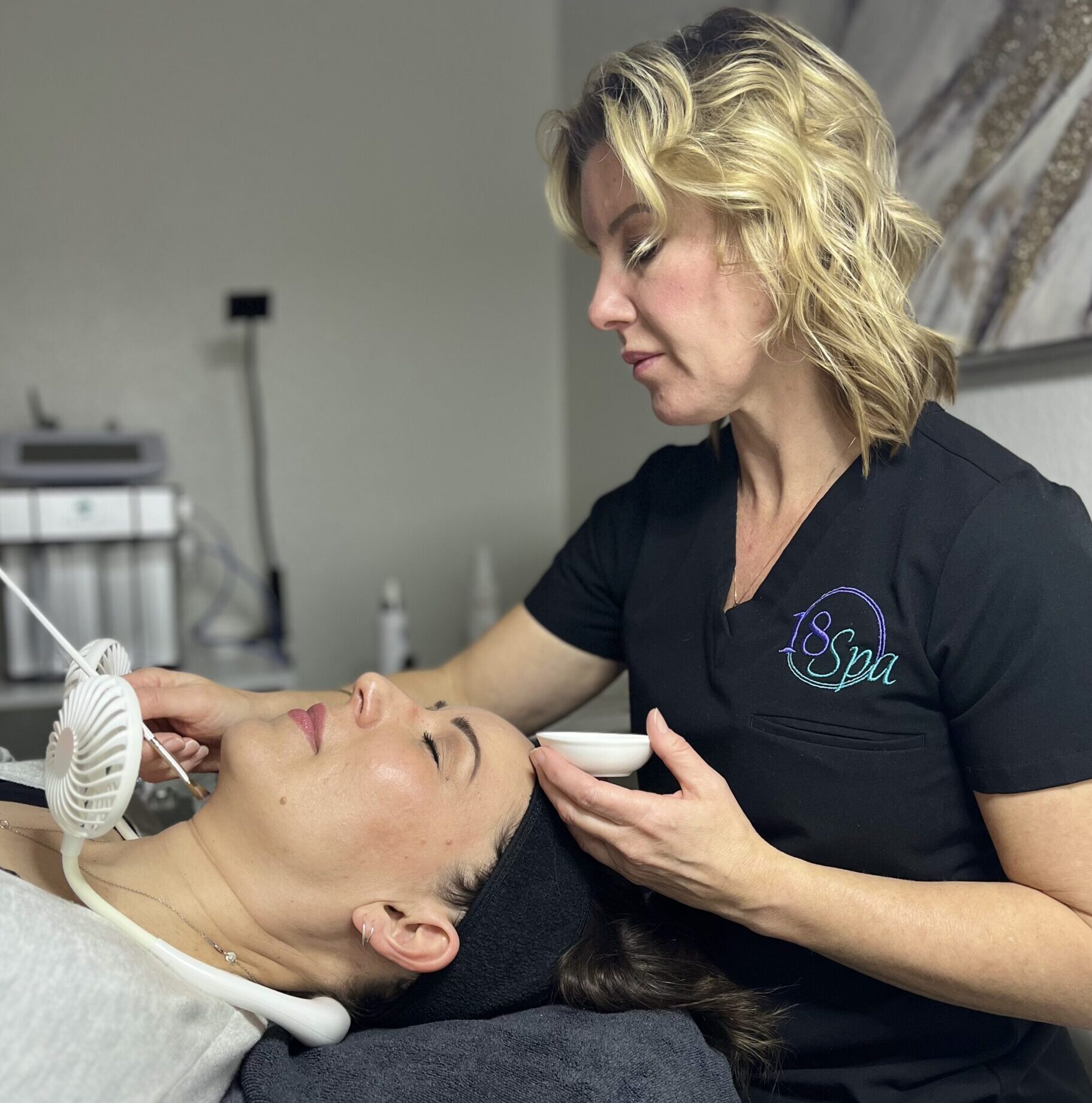
Chemical Peels Are Getting Smarter—And Gentler—in 2026
If you’ve been watching the skincare world, you’ve noticed a shift. Chemical peels are no longer the red-faced, week-long-recovery treatments your older sister warned you about. Today’s formulations and protocols are more targeted, more customizable, and far kinder to your schedule. At 18 Spa in Loveland, we’re seeing clients ask sharper questions: Which acids work for my skin type? How much peeling will I actually see? Can I do this before my work trip?
Here’s what’s new—and what you need to know before booking your next peel.
The Science Behind Modern Chemical Peels
Chemical peels use controlled exfoliation to remove damaged outer layers of skin. Acids—glycolic, salicylic, lactic, TCA, or blends—dissolve the bonds between dead cells, prompting your skin to shed and regenerate. The result: smoother texture, reduced pigmentation, fewer breakouts, and a more even tone.
What’s changed in 2026 is precision. We now layer acids at specific pH levels, combine them with barrier-supporting ingredients, and adjust contact time based on your Fitzpatrick type and tolerance. This means less guesswork, fewer complications, and better outcomes for a wider range of skin tones.
Three Trends Shaping Chemical Peels Right Now
1. Hybrid Peels That Target Multiple Concerns
Single-acid peels still have their place, but hybrid formulations are dominating treatment menus. A peel might combine:
- Salicylic acid to clear congested pores
- Mandelic acid to brighten without irritation
- Lactic acid to hydrate while exfoliating
This approach lets us address acne and hyperpigmentation in one session—something that used to require separate treatments spaced weeks apart.
2. “Lunchtime” Peels With Minimal Downtime
Superficial peels—often called lunchtime peels—use lower concentrations and shorter contact times. You might see light flaking for two to three days, but no dramatic peeling or redness that keeps you home.
These are ideal if you:
- Want gradual improvement without a recovery window
- Have an event in a week and need a glow boost
- Are new to peels and testing your tolerance
Expect subtle results after one session; most clients book a series of three to six treatments spaced two to four weeks apart.
3. Medical-Grade Peels Under Licensed Oversight
The rise of at-home peels and med-spa chains has made professional oversight more important than ever. Medium-depth and deeper peels—those using higher TCA percentages or layered protocols—require an RN or MD to assess your skin, monitor the peel in real time, and adjust if needed.
In Northern Colorado, clients are asking more questions about credentials. They want to know who’s mixing the solution, who’s applying it, and what happens if their skin reacts unexpectedly. That’s not paranoia—it’s smart.
What to Expect During and After a Chemical Peel
During Your Appointment
Your provider will cleanse your skin, apply the peel solution, and monitor your response. You’ll feel tingling or mild stinging—intensity varies by peel depth. Most sessions last 30 to 45 minutes, including prep and post-peel soothing.
Immediately After
Your skin may look pink or feel tight, similar to a mild sunburn. Superficial peels cause minimal visible reaction; medium peels can leave you red for a day or two.
Days 2–7
Peeling typically starts around day three and lasts three to five days. It’s not always dramatic—some clients see light flaking, others experience sheet-like peeling. Do not pick or pull. Let it shed naturally.
Aftercare Essentials
- Gentle cleanser only—no actives, no scrubs
- Moisturize frequently to support barrier repair
- SPF 30+ daily, reapplied every two hours outdoors
- Avoid heat, sweat, and chlorine for 48 to 72 hours
- Skip retinoids and acids until your provider clears you (usually seven to ten days)
Chemical Peels in Loveland: What Local Clients Are Asking
We hear three questions more than any others:
“Will I look obviously ‘peeled’ at work?”
It depends on the peel depth. Superficial peels rarely cause visible peeling—you might just look a bit dry. Medium peels can result in noticeable flaking. Schedule accordingly, or ask about enzyme peels if downtime is a dealbreaker.
“How much does a chemical peel cost?”
Expect $100 to $150 for a superficial peel, $200 to $350 for a medium peel. Packages and series pricing often bring the per-session cost down. Always ask for a treatment plan during your consultation so you know the total investment.
“Can I do a peel if I have melasma or darker skin?”
Yes—but it requires careful selection. Certain acids (like mandelic or lactic) and lower concentrations reduce the risk of post-inflammatory hyperpigmentation. An RN-led consultation is essential to map your skin’s response and adjust protocols.
Why Professional Application Matters
You can buy 30% glycolic acid online. But you can’t buy the clinical judgment that tells your provider to neutralize early, adjust pH, or skip a second layer because your skin is reacting faster than expected.
Chemical peels are chemistry. Your skin’s pH, the solution’s pH, contact time, and your unique biology all interact. A licensed professional reads those signals in real time and adjusts. That’s the difference between a glow and a burn.
How to Choose the Right Peel for Your Goals
Start with your primary concern:
- Fine lines and dullness: Glycolic or lactic acid peels
- Acne and oiliness: Salicylic acid peels
- Hyperpigmentation: Mandelic, kojic, or TCA blends
- Sensitive or rosacea-prone skin: Enzyme peels or very low-percentage lactic
Your provider will also consider:
- Skin type and tone
- Current skincare routine (retinoids, acids, prescriptions)
- Sun exposure and lifestyle
- Timeline and downtime tolerance
A consultation takes 15 to 20 minutes and ensures you’re matched to the right treatment—not just the most popular one.
Ready to See What a Chemical Peel Can Do?
If you’re curious whether a peel fits your skin goals, the best next step is a conversation. Our RN-led team will assess your skin, walk you through realistic outcomes, and build a plan that respects your schedule and comfort level.
Explore our full menu of chemical peels and other advanced skincare treatments, or book your consultation today. We’re here to help you make informed, confident choices—one treatment at a time.
FAQ: Chemical Peels
How often should I get a chemical peel?
Superficial peels can be repeated every two to four weeks; medium peels are typically spaced six to eight weeks apart. Your provider will recommend a series based on your skin’s response and goals. Maintenance peels—once every one to three months—help sustain results.
Can I wear makeup after a chemical peel?
Wait at least 24 hours, and longer if your skin is actively peeling. When you do apply makeup, use mineral-based formulas and avoid heavy coverage that traps heat or irritates healing skin. Always cleanse gently and reapply SPF.
Are chemical peels safe during pregnancy or breastfeeding?
Most providers avoid chemical peels during pregnancy and breastfeeding due to limited safety data on acid absorption. Enzyme peels or hydrating facials are safer alternatives. Always disclose your status during your consultation so your provider can recommend appropriate options.