
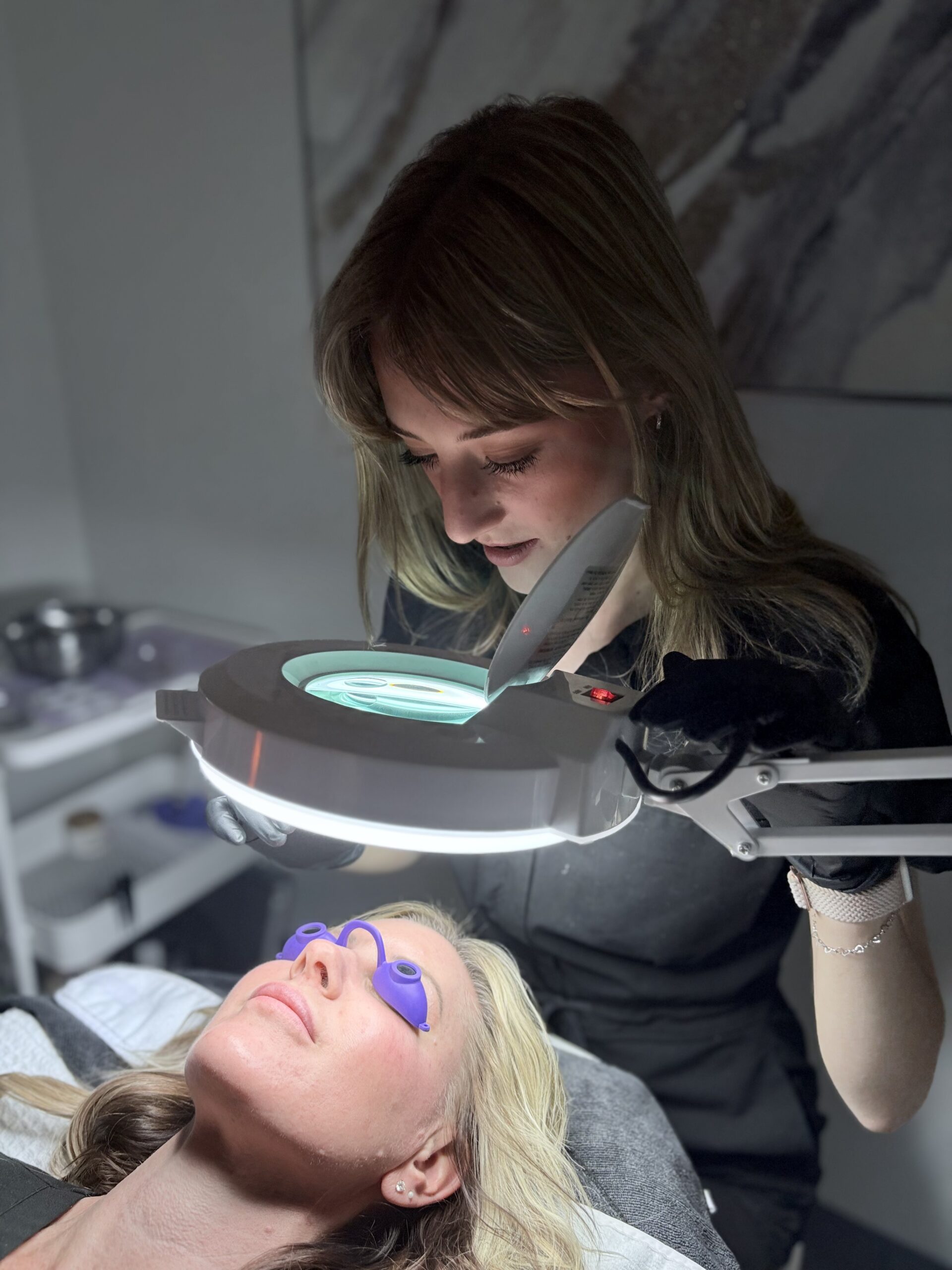
What Makes a Facial “Medical-Grade”?
The difference comes down to three factors: ingredient strength, professional application, and medical supervision.
Ingredient concentration matters. Retail products are capped at lower percentages—typically 2% salicylic acid or 10% glycolic acid. Medical-grade formulations can safely use higher concentrations (up to 30% glycolic, 20% salicylic, or prescription-strength retinoids) because they’re applied by trained professionals who understand skin physiology and contraindications.
Device-based treatments require expertise. Microdermabrasion, LED therapy, microcurrent, and ultrasonic exfoliation aren’t just buzzwords. When used correctly by licensed providers, these technologies can stimulate collagen production, improve product penetration, and accelerate cellular turnover. When used incorrectly, they can cause burns, hyperpigmentation, or wasted money.
Medical oversight protects you. RN-led teams assess your skin type, medical history, and current medications before recommending treatments. They adjust protocols for sensitive skin, rosacea, active breakouts, or recent procedures. This isn’t about upselling—it’s about safety and results.
Recent Research: Do Facials Actually Work?
A 2024 study published in the Journal of Cosmetic Dermatology tracked 180 patients receiving monthly medical-grade facials over 12 weeks. Researchers measured improvements in skin hydration, elasticity, and pigmentation using objective imaging tools—not subjective self-reports.
Key findings:
- Hydration levels increased by an average of 34% after three sessions
- Fine line depth decreased by 18–22% in patients combining chemical exfoliation with LED therapy
- Acne lesion counts dropped by 40% in participants receiving salicylic peels and extractions
- Patient satisfaction scores were highest when providers set realistic timelines (6–8 weeks for visible change)
The takeaway? Consistency matters more than intensity. One aggressive treatment won’t outperform a series of moderate, well-timed sessions.
Another 2025 review in Dermatologic Surgery examined combination facials—treatments layering multiple modalities in one session. The data showed that pairing enzyme exfoliation with oxygen infusion or microcurrent improved outcomes by 25–30% compared to single-method facials. The reason: different technologies target different skin layers and concerns simultaneously.
What to Expect During a Medical-Grade Facial in Loveland
Here’s a realistic walkthrough based on standard protocols at medical spas in Northern Colorado.
Consultation (10–15 minutes): Your provider examines your skin under magnification, asks about your goals, reviews any active prescriptions (retinoids, antibiotics, hormones), and discusses contraindications. Be honest about recent sun exposure, cosmetic injectables, or laser treatments—timing matters.
Cleansing and prep (5 minutes): Double cleanse to remove makeup, oil, and environmental debris. This step ensures active ingredients penetrate properly.
Exfoliation (10–20 minutes): Depending on your skin type, this might include:
- Chemical peels (glycolic, lactic, salicylic, or enzyme-based)
- Microdermabrasion for texture and tone
- Dermaplaning to remove vellus hair and dead cells
Expect mild tingling or warmth. If you feel burning or sharp pain, speak up immediately.
Extractions (optional, 5–10 minutes): Manual removal of blackheads and clogged pores. This can be uncomfortable but shouldn’t be unbearable. Proper technique minimizes scarring and bruising.
Treatment serums and devices (15–20 minutes): This is where medical-grade facials diverge from spa facials. Your provider may apply:
- Hyaluronic acid or peptide serums under ultrasonic waves for deeper penetration
- LED light therapy (red for collagen stimulation, blue for acne bacteria)
- Microcurrent to tone facial muscles and improve contour
- Oxygen infusion to boost circulation and hydration
Mask and finishing products (10 minutes): Calming masks reduce redness. Your provider applies SPF (non-negotiable) and may send you home with specific aftercare products.
Total time: 60–90 minutes. You’ll leave with mild redness that typically fades within 2–4 hours. Some peels cause light flaking for 3–5 days.
Choosing the Right Facial for Your Skin Concerns
Not all facials are created equal. Here’s how to match treatment to goal.
For fine lines and loss of firmness: Look for facials combining microcurrent, peptide serums, and red LED therapy. Plan for monthly sessions over 3–4 months, then maintenance every 6–8 weeks.
For acne and congestion: Salicylic or mandelic acid peels, extractions, and blue LED light target bacteria and oil production. Expect an initial purge period (breakouts may worsen for 7–10 days) before improvement. Budget for bi-weekly treatments during active breakouts, then monthly maintenance.
For hyperpigmentation and sun damage: Glycolic or lactic acid peels, vitamin C infusions, and brightening enzymes work over time. Pigment sits deep in the skin—plan for 6–8 sessions spaced 3–4 weeks apart. Always pair with daily SPF 30+ or results will reverse.
For dull, dehydrated skin: Hydrating facials with hyaluronic acid, oxygen infusion, and gentle enzyme exfoliation deliver immediate glow. These are safe for sensitive skin and require minimal downtime. Monthly sessions maintain results.
Aftercare: Protecting Your Investment
Your skin is more vulnerable for 48–72 hours post-treatment. Follow these guidelines:
- Skip active ingredients (retinoids, AHAs, BHAs) for 3–5 days
- Avoid direct sun exposure; wear SPF 30+ and reapply every 2 hours
- Don’t pick at flaking skin—let it shed naturally
- Use gentle, fragrance-free cleansers and moisturizers
- Avoid saunas, hot yoga, and intense workouts for 24 hours (heat and sweat can irritate freshly exfoliated skin)
- Stay hydrated—drink extra water to support skin barrier repair
If you experience prolonged redness (beyond 48 hours), blistering, or severe itching, contact your provider immediately.
Cost and Frequency: Setting Realistic Expectations
Medical-grade facials in Northern Colorado typically range from $125–$300 per session, depending on complexity and technology used. Basic enzyme or hydrating facials sit at the lower end; combination treatments with microcurrent, LED, or advanced peels cost more.
Most providers recommend starting with a series of 3–4 treatments spaced 3–4 weeks apart, then transitioning to maintenance every 4–8 weeks. This isn’t a revenue grab—it’s biology. Skin cell turnover takes 28–40 days (longer as you age). Consistent stimulation produces cumulative results.
Many medical spas offer package pricing that reduces per-session cost by 10–20%. Ask about membership programs if you plan to make facials a regular part of your routine.
Why Medical Oversight Matters
Licensed medical professionals—RNs, NPs, or MDs—understand skin anatomy, wound healing, and contraindications. They can identify early signs of skin cancer, rosacea flares, or allergic reactions that untrained estheticians might miss.
They also know when not to treat you. If you’re on isotretinoin (Accutane), recently had laser resurfacing, or are pregnant, certain facials can cause harm. A qualified provider will postpone treatment or modify protocols to keep you safe.
This level of care isn’t standard at every spa. When researching providers in Loveland or Northern Colorado, verify credentials, ask about training, and read reviews that mention safety protocols and realistic outcomes—not just “amazing results.”
Frequently Asked Questions
How soon will I see results from a medical-grade facial?
You’ll notice immediate improvements in hydration and glow, but deeper changes—reduced fine lines, fading pigmentation, or acne improvement—take 4–6 weeks and multiple sessions. Collagen remodeling is a slow process. Providers who promise instant transformation are overselling.
Can I get a facial if I have sensitive skin or rosacea?
Yes, but treatment must be customized. Enzyme-based exfoliation, calming masks, and gentle LED therapy work well for reactive skin. Avoid aggressive peels, hot steam, and harsh scrubs. A thorough consultation ensures your provider tailors the facial to your skin’s tolerance level.
How do I know if I need a facial or a more advanced treatment like a chemical peel or laser?
Facials address surface-level concerns—hydration, mild texture issues, and maintenance. If you have deep wrinkles, severe acne scarring, or significant sun damage, you may need stronger interventions. A licensed provider can assess your skin and recommend the most effective (and cost-efficient) path forward. Sometimes a series of facials is the right starting point; other times, a single laser session delivers better results.
Ready to experience the difference medical-grade care makes? Book a consultation at 18 Spa and let our RN-led team design a facial protocol tailored to your skin’s unique needs. No hype, no guesswork—just evidence-based treatments and honest guidance. Schedule your appointment today.